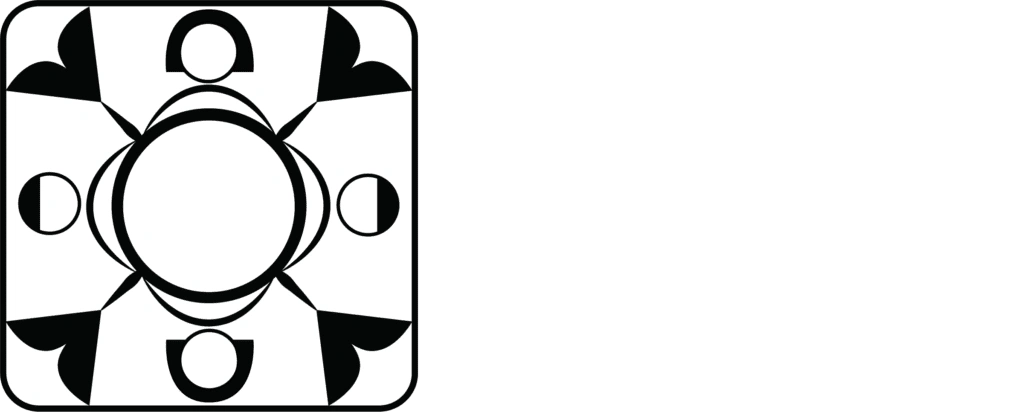
K. V. Haridasan (1937–2014) was a prominent Indian painter, theorist, and art educator globally celebrated as a pioneer of the Neo-Tantra movement in modern Indian art. Born in Cannanore (now Kannur), Kerala, he earned a degree in psychology from Madras University before pursuing his passion for visual arts, completing his Diploma in Painting at the Government College of Arts and Crafts, Madras, in 1966. Deeply rooted in Indian philosophy, esoteric symbolism, and folk rituals, Haridasan pioneered a non-figurative visual language constructed around sacred geometric grids, symmetrical color fields, and spiritual motifs such as lotus petals, flames, circles, and triangles. His celebrated thematic series—most notably the Yantra series (1968–1971) and the long-running Brahmasutra series—translated ancient Indian meditative geometry into dynamic, hard-edge modernist abstraction. Beyond his canvas practice, Haridasan was a seminal art pedagogue and theorist; he served as the Professor and Principal of the College of Fine Arts, Thiruvananthapuram (1980–1992), edited the influential journal Artrends (1979–1985), and authored the book Intimations on Art (1994).
As a foundational member of the Madras Art Movement, Haridasan holds a significant place as one of the key original resident artists of the Cholamandal Artists' Village, moving into the commune shortly after its establishment in 1965. Within the movement's ecosystem, Haridasan expanded K.C.S. Paniker’s vision of nativism by connecting local South Indian ritualistic geometry (kolams, yantras, and temple diagrams) directly with global modern abstraction. His seminal 1968 Yantra exhibition at the British Council in Chennai is recognized as one of the earliest standalone Neo-Tantric exhibitions in India, demonstrating how native spiritual diagrams could form a contemporary visual language.
Haridasan achieved extensive national and international acclaim throughout his life. He was nominated as an Eminent Artist Member by the Lalit Kala Akademi, New Delhi (1994), and was honored with the Lalithakala Puraskaram (2003) and the Raja Ravi Varma Puraskaram (2013) by the Kerala Lalithakala Akademi. His works represented India internationally at major platforms, including the Paris Biennale (1971), the 2nd International Triennale India (1971), and the landmark Neo-Tantra survey exhibition at UCLA, Los Angeles (1985–1986). Today, his paintings are preserved in major public collections worldwide, including the National Gallery of Modern Art (NGMA) in New Delhi.